“What we do now is the most important factor for tomorrow. Unless we change our emotional pattern of behavior, tomorrow will resemble yesterday in most details except the date.”
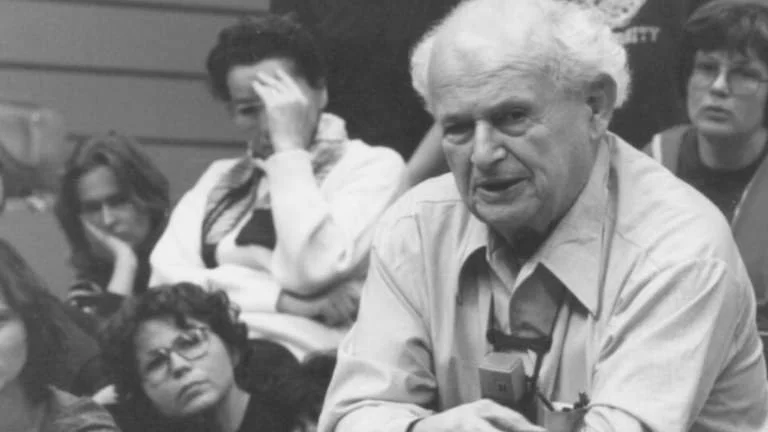
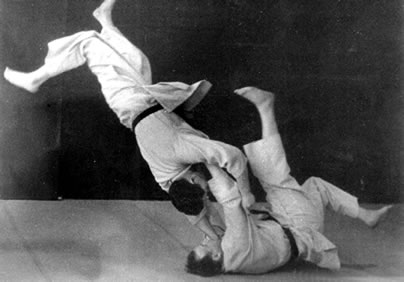
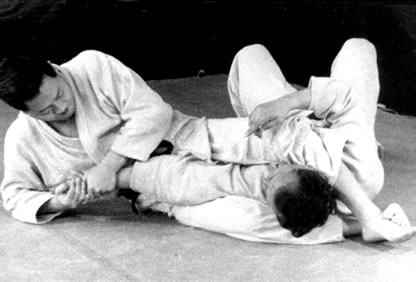
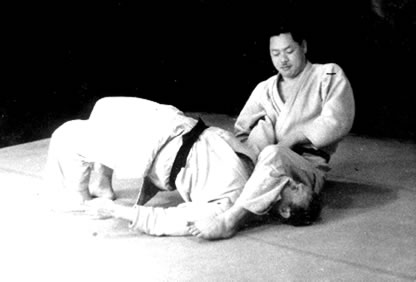
The method was developed by physicist and Judo teacher Dr. Moshe Feldenkrais (1904-1984). He received his PhD from the Sorbonne and worked in the Joliot-Curie laboratory in Paris. He also spent many decades studying Judo, training with its founder, Kanō Jigorō.
He discovered how to reeducate his own movement when he was incapacitated by a sports-related injury and given little chance of ever walking without pain. Then he worked tirelessly to develop rhow to teach an intelligent relationship to gravity using principles of human learning, physics, and martial arts.
He ingeniously focused on directed attention and novel movement patterns to restore faulty muscular learning. Dr. Feldenkrais devised thousands of Awareness Through Movement lessons to foster human development and learning.
He applied his knowledge of anatomy, physiology, physics, and engineering, as well as his mastery of martial arts, to restore his own functioning and, later, the functioning of many others, including luminaries like David Ben-Gurion, Yehudi Menuhin, Peter Brooks, Gregory Bateson, Jonas Salk, and more.
The method's success stems from his ability to offer extensive variations and creativity in human movement. These variations access our innate ability to make new neurological connections, just as we did when we first tested new movement patterns as babies and children.
Read a chronological overview of Moshe's life.
Dr. Feldenkrais's books include:
Feldenkrais at Cern
Did you know Dr. Feldenkrais offered a lecture to his physics colleagues at Cern (The European Organization for Nuclear Research) in Geneva, Switzerland? Here are the videos, albeit grainy. He explains his method in great detail. Close captions are available later in the video. It’s worth watching for those interested in a deep dive.
Moshé Feldenkrais, colloquium: "Physics and My Method" - 1981
(Source: CERN Bulletin 19/81)
Moshe Feldenkrais is known from the textbooks as a collaborator of Joliot-Curie, Langevin, and Kowarski participating in the first nuclear fission experiments. During the war he went to Great Britain and worked on the development of submarine detection devices. From experimental physics, following finally a suggestion of Lew Kowarski, he turned his interest to neurophysiology and neuropsychology. He studied the cybernetical organisation between human body dynamics and the mind.
He developed his method known as "Functional integration" and "Awareness through movement". It has been applied with surprising results to post-traumatic rehabilitation, psychotherapy, re-education of the mentally or physically handicapped, and improvement of performance in sports. It can be used by everybody who wants to discover his natural grace of movement.
Here is Moshe practicing judo.